Industrial Monitoring and Control Software
Software systems for coordinating equipment, monitoring operational state, handling alarms, and managing industrial or test processes.
Control systems, monitoring platforms, data acquisition, and equipment integration software built for real-world industrial and test environments.
Most industrial systems are not built around a single device.
They are built around the coordination of many different systems working together reliably in the real world.
That may include:
Individually, these components may work perfectly.
The challenge is getting them to function as a cohesive operational system.
That is where many industrial and test environments become fragile, time-consuming to support, and increasingly complex as they evolve.
Most real-world monitoring and control systems eventually require the same core architectural concepts:
That is the layer I focus on.
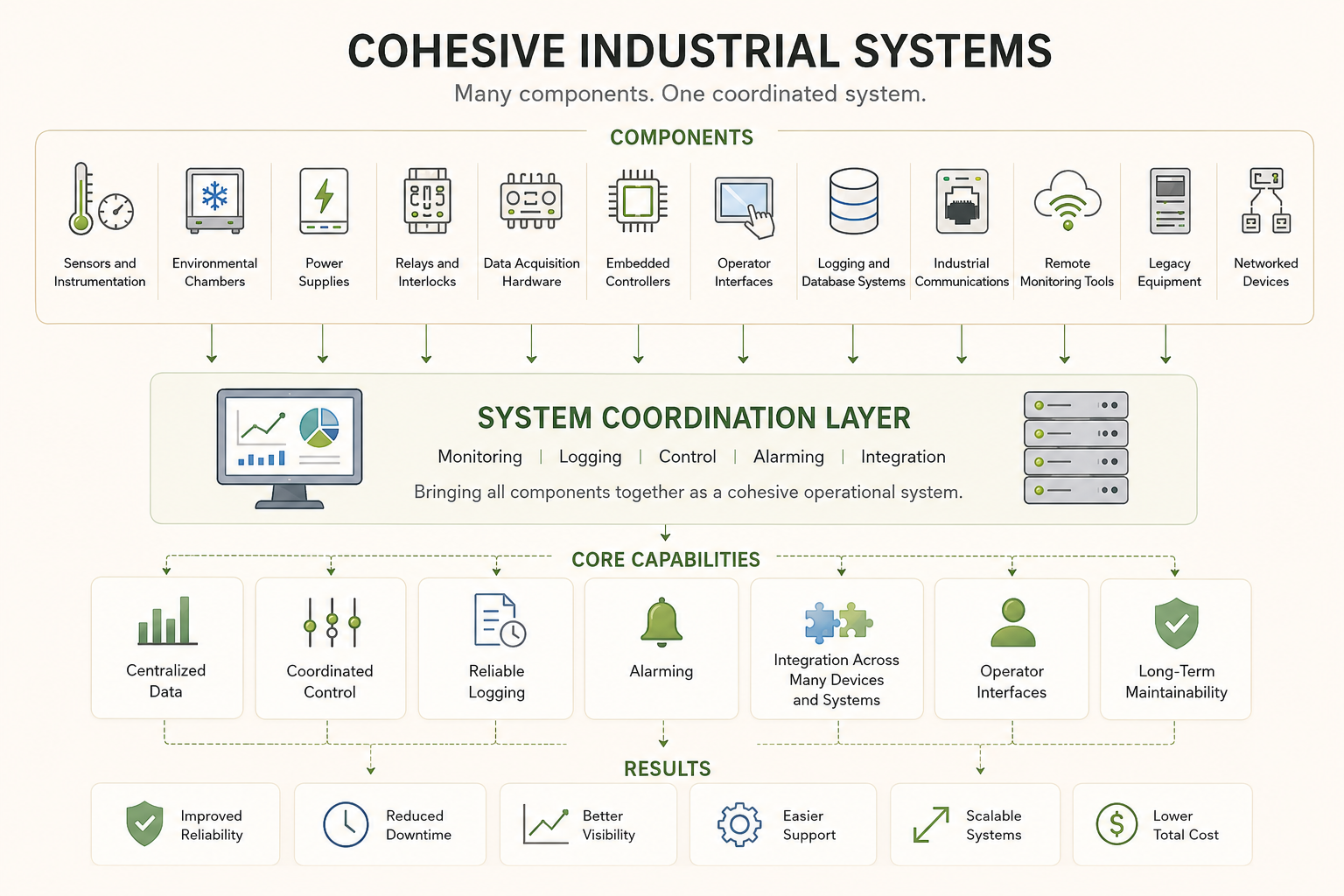
Software systems for coordinating equipment, monitoring operational state, handling alarms, and managing industrial or test processes.
Centralized collection and storage of temperatures, voltages, pressures, statuses, events, and operational data.
Integration between instrumentation, embedded systems, industrial hardware, databases, and user interfaces.
Web-based systems for monitoring equipment, reviewing logs, and interacting with industrial systems remotely.
Updating older systems with improved communications, monitoring, logging, and usability.
Monitoring and control infrastructure for engineering test systems, environmental chambers, and automation rigs.
Experience includes work involving:
Different devices often operate through disconnected software, interfaces, and logging systems.
Critical events may occur between polling intervals, during outages, or inside systems that were never designed for coordinated historical logging.
Temporary solutions accumulate over time until the architecture becomes increasingly difficult to maintain and troubleshoot.
Equipment may technically function correctly while the overall system becomes difficult for operators and engineers to use effectively.
Reliable industrial systems are not just collections of hardware and software.
They are coordinated operational systems where:
The goal is not unnecessary complexity.
The goal is operational clarity, reliability, and maintainability.
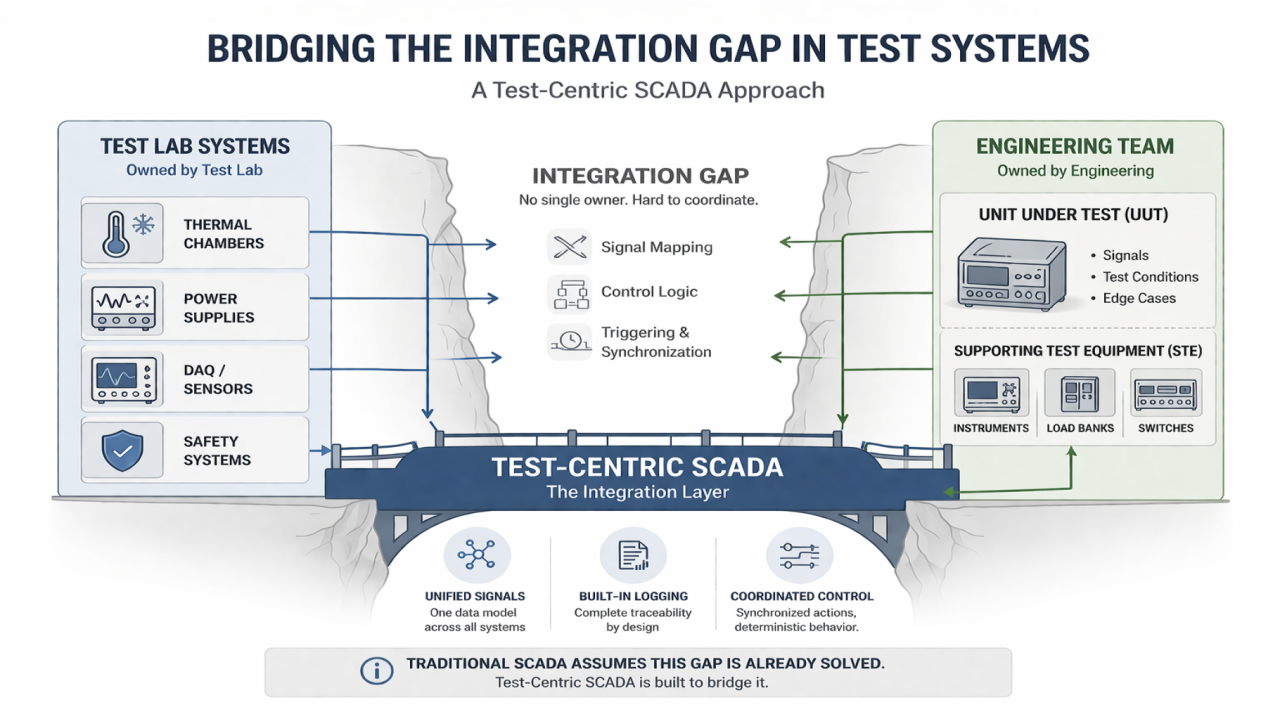
It is often assumed that running the test is the most challenging aspect of testing. In practice, the greater challenge lies in making all system components work together.
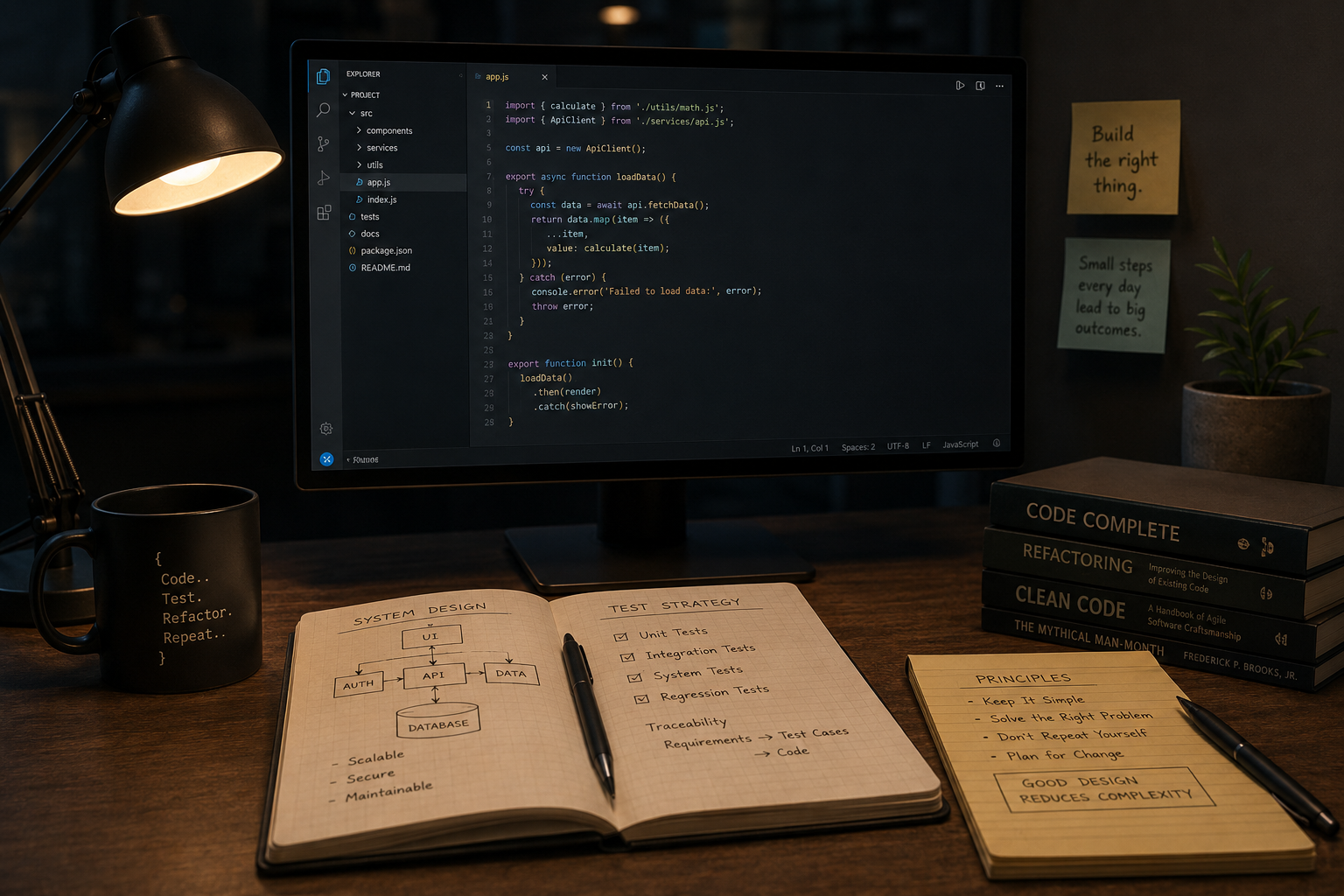
What is Software Engineering and Why Does It Matter? Let’s start by clarifying what software engineering entails. It is a systematic and disciplined approach to designing, developing, and maintaining software systems.
Available for industrial monitoring systems, embedded integration, control software, and real-world equipment coordination.
Contact