Linux Where It Fits
Many embedded systems need coordination, communication, logging, and interface management more than hard real-time control.
Embedded Linux, hardware integration, industrial communications, and edge control systems designed for machines, instruments, test stands, and field equipment.
Selecting the right processor, framework, or development board is important. But it's not the only factor in creating a reliable embedded system.
Reliable embedded systems come from understanding how hardware, software, timing, communications, power, and deployment constraints interact.
Making these pieces function as a cohesive system means coordinating hardware, software, and communications in the real world.
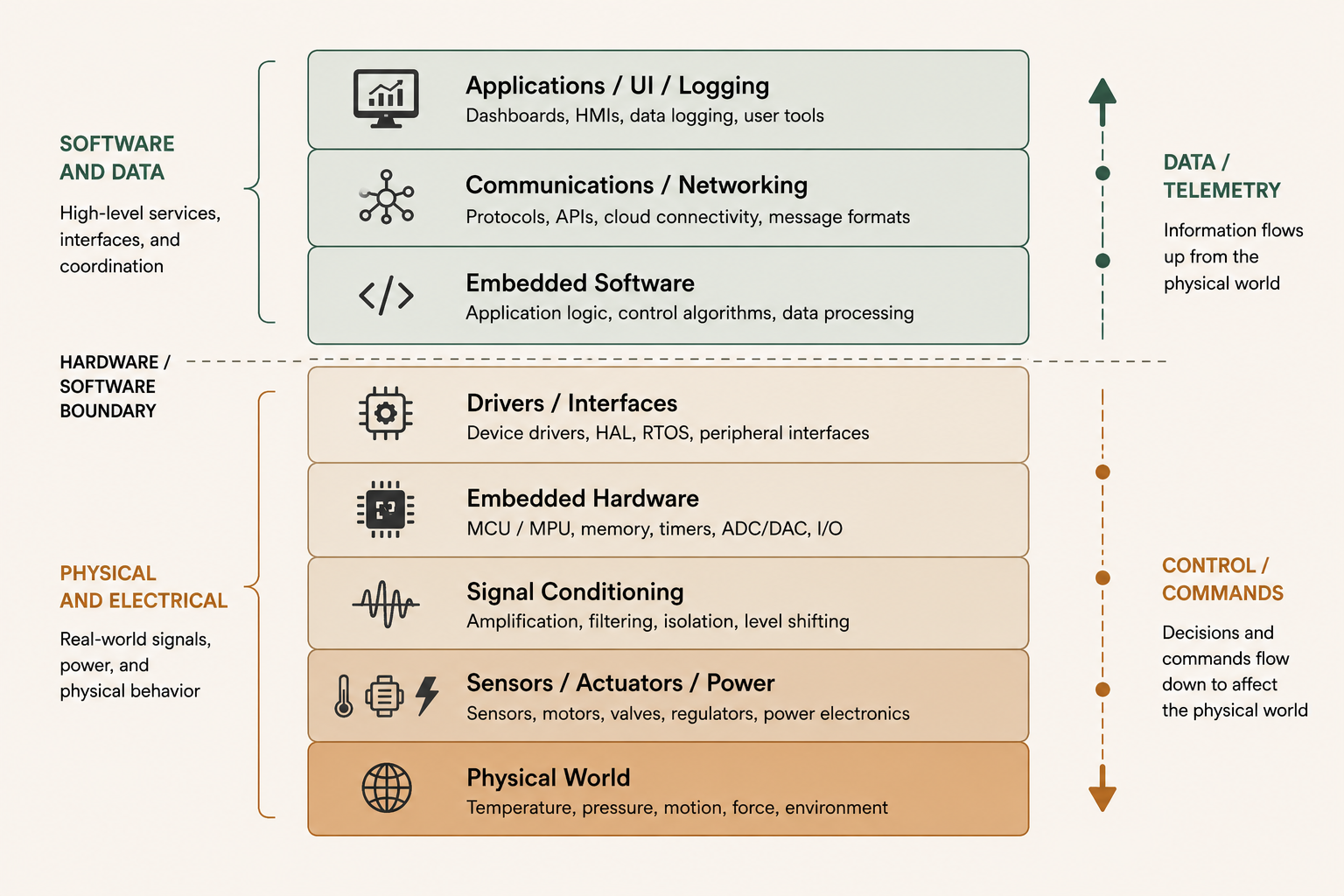
Good embedded design starts with system boundaries, responsibilities, timing requirements, and failure modes. The tools matter, but the structure matters more.
Many embedded systems need coordination, communication, logging, and interface management more than hard real-time control.
Timing-sensitive and electrically sensitive work should often be handled by dedicated peripheral hardware.
The actual edge is where software owns the hardware interface, not where a dashboard receives data.
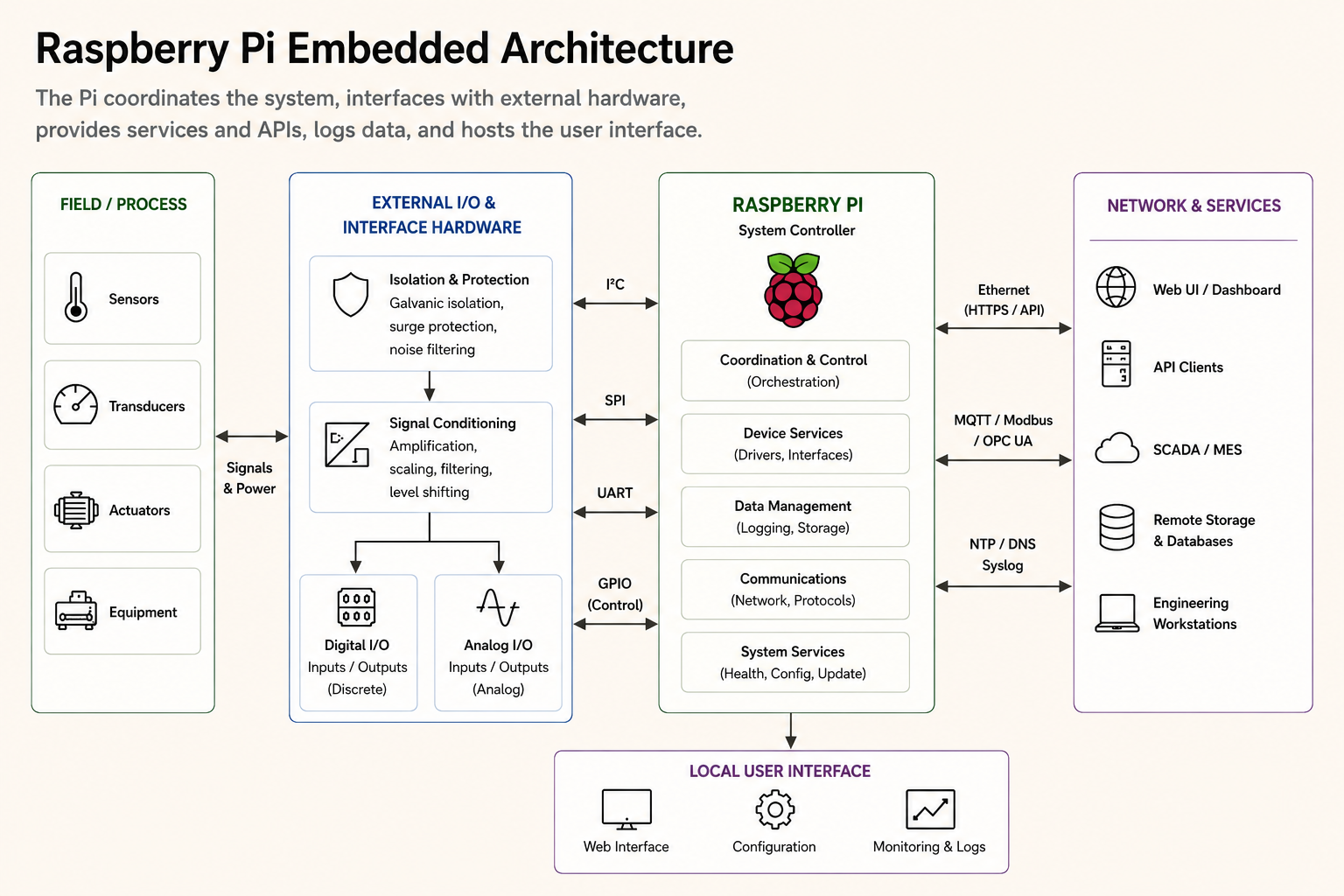
A Raspberry Pi can be a strong embedded control platform when it is used correctly. It should coordinate the system, manage communication, expose APIs, host interfaces, and collect data.
Field I/O, isolation, signal conditioning, and timing-sensitive behavior belong in the proper hardware layer. That separation is what makes the system reliable enough to actually deploy.
Embedded systems are rarely isolated devices. They are usually part of a larger environment involving sensors, instruments, controllers, networks, operators, and data.
SigCore UC is an example of these ideas applied to a real embedded control platform: isolated I/O, networked control, local coordination, data acquisition, and deployable hardware.
Embedded systems are not just code running on a board. They are integrated platforms that connect software decisions to physical behavior.
The platform is currently being brought to market in partnership with Crowd Supply and Mouser Electronics.
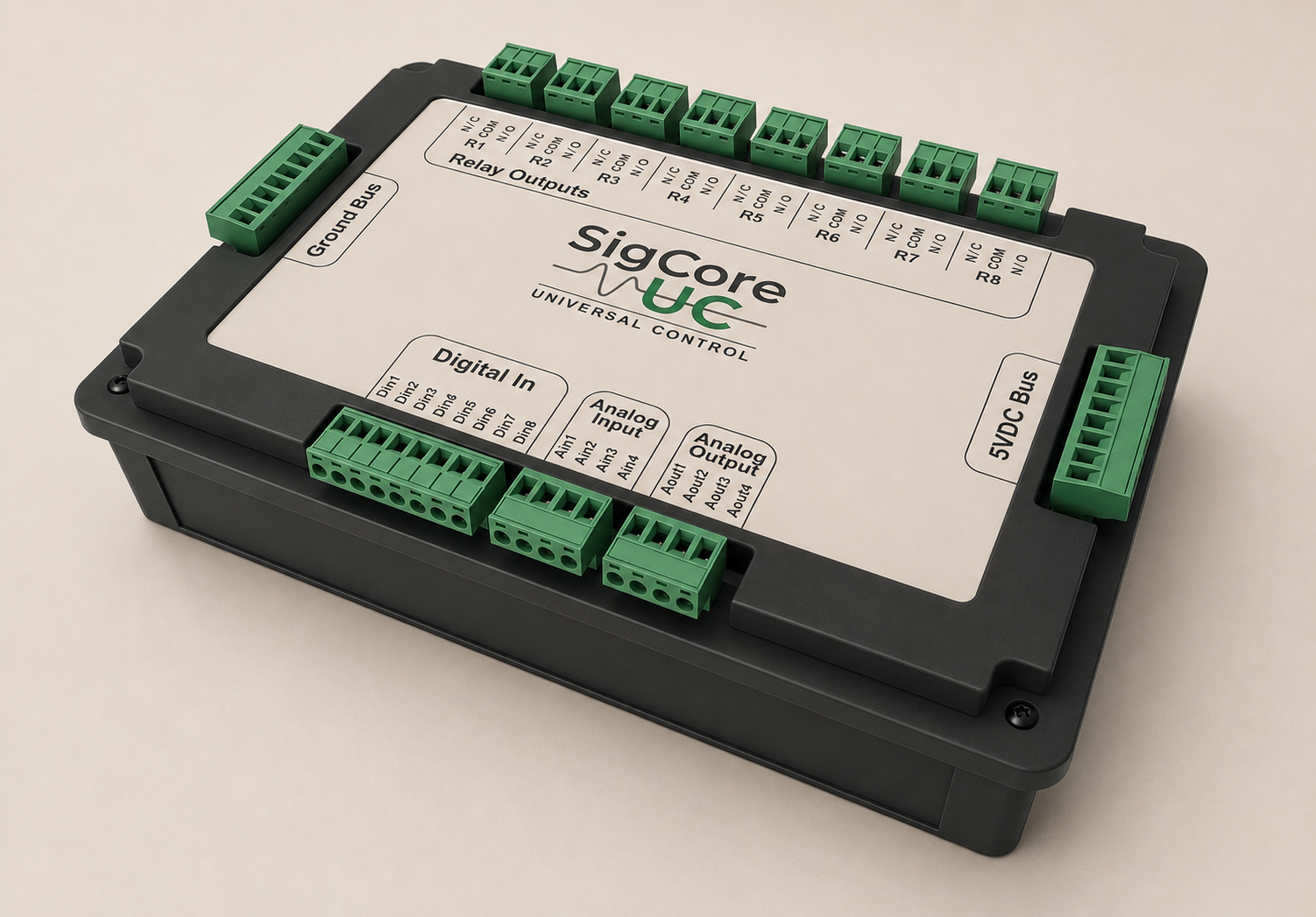
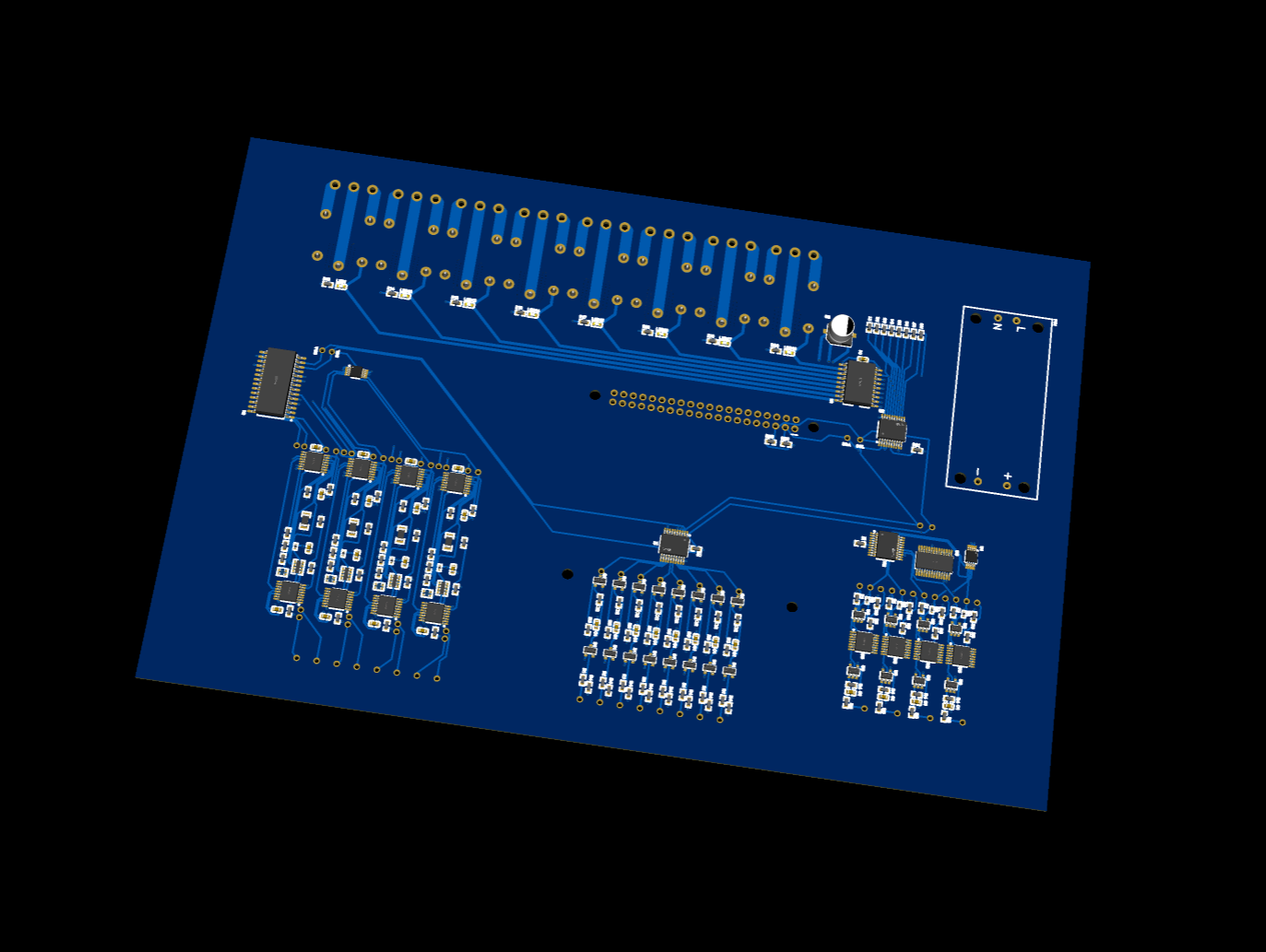
Embedded systems often require hardware designed specifically for the application: custom I/O, signal conditioning, analog interfaces, power distribution, and system integration hardware.
I design PCBs intended for real deployment environments, including embedded controller hardware, interface boards, analog and digital I/O, and supporting circuitry for control and data acquisition systems.
The focus is not just making the board function. The goal is to build hardware that is maintainable, manufacturable, electrically reliable, and practical to integrate into a larger system.
These articles expand on the architecture, timing, integration, and deployment issues that shape reliable embedded systems.
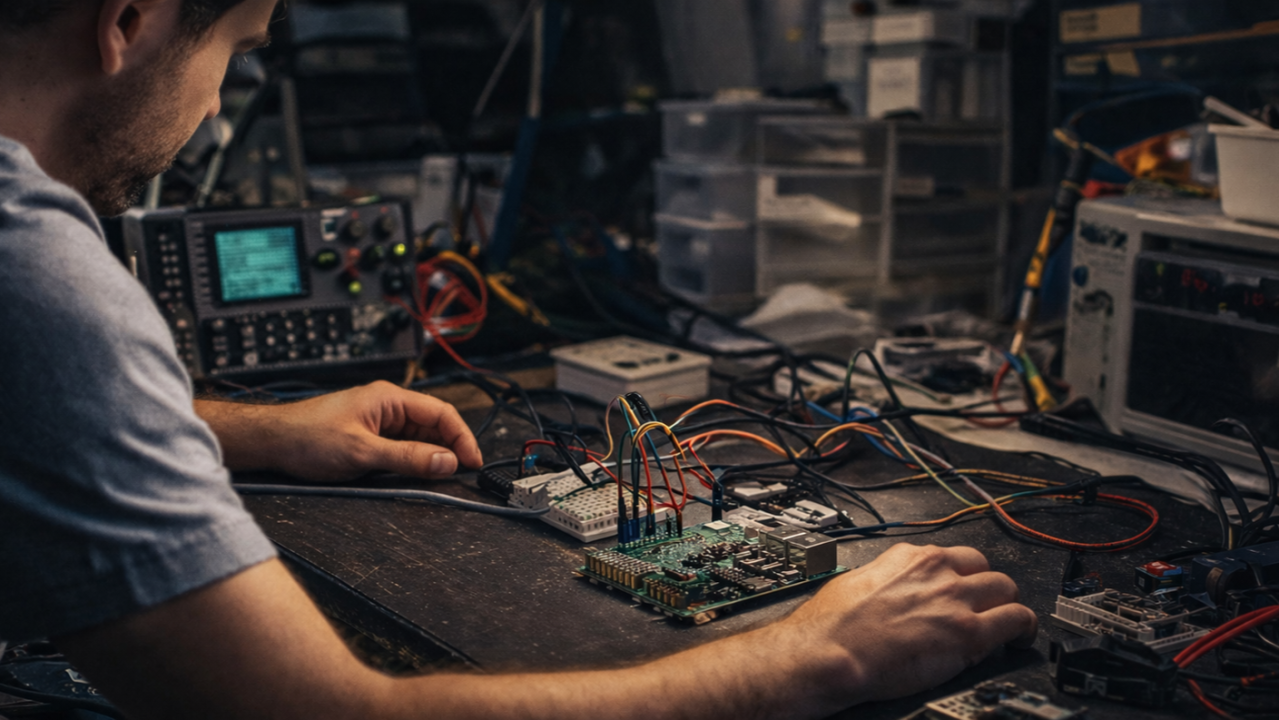
The Raspberry Pi shows up everywhere in control and data acquisition discussions. Sometimes it’s presented as a low-cost alternative to industrial hardware. Other times it’s dismissed outright as something that doesn’t belong anywhere near a real system. Both reactions come from the same place: evaluating it against the wrong expectations.

There’s a lot of noise around “edge computing.” Most of it focuses on deployment stacks. Containers, orchestration, cloud connectivity. That’s useful if your problem is distribution. But at the edge, the problem isn’t distribution.
Most test fixtures aren’t reusable. They get rebuilt every time. Different wiring. Different scripts. Same problems. It doesn’t have to be that way.
Available for embedded systems consulting, system integration, industrial software, and Linux-based control architecture.
Contact