AI as a Tool
AI can accelerate development, exploration, and implementation, but engineering judgment remains the controlling force.
Embedded systems, industrial automation, test systems, and real-world integration built around practical engineering, reliable architecture, and physical systems that must perform real work.
Reliable systems come from understanding how hardware, software, timing, communications, operators, and physical constraints interact.
The focus is not complexity for its own sake. The focus is coordination: making the pieces of a system work together clearly, reliably, and maintainably.
AI can accelerate development, exploration, and implementation, but engineering judgment remains the controlling force.
Systems should be expandable through stable interfaces, reusable modules, and replaceable components.
Real-world I/O should be accessible through software, services, and APIs without unnecessary industrial overhead.
The hard part of testing is coordinating the system, not merely running individual devices.
A Raspberry Pi should coordinate the system. Dedicated external hardware should handle field I/O, isolation, and signal conditioning.
My background is in industrial controls, automation, embedded systems, test systems, remote monitoring, data acquisition, and field integration.
That work has involved real equipment: chambers, controllers, instruments, sensors, relays, power systems, logging systems, operator interfaces, and deployed control software.
The common thread is practical system integration: making hardware, software, communications, and data work together in real operating environments.
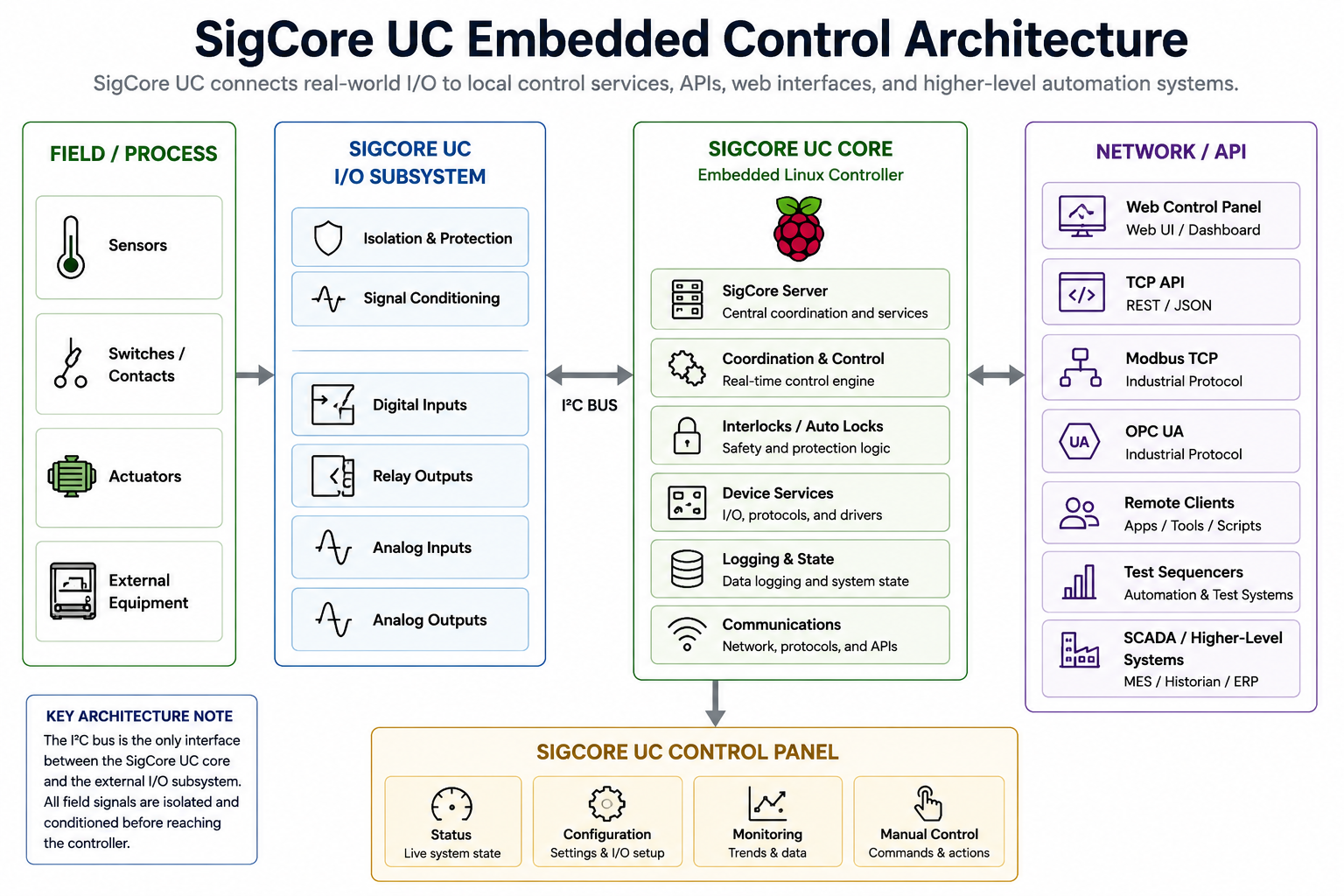
Linux-based control, services, APIs, device coordination, and edge systems.
Modbus, Ethernet devices, serial systems, controllers, instruments, and protocol integration.
Sensors, scaling, filtering, logging, visibility, and long-term measurement systems.
Test stands, chambers, instruments, sequencing, logging, and coordinated execution.
Supervisory interfaces, remote access, status visibility, alarms, trends, and logs.
Browser-based monitoring, control panels, dashboards, and network-accessible systems.
The systems I work on are not abstract software exercises. They involve physical signals, real equipment, operational constraints, field wiring, communications, data logging, and deployment.
A typical system may include chambers, power supplies, instrumentation, sensors, relays, data acquisition hardware, APIs, dashboards, local control services, and long-term logging.
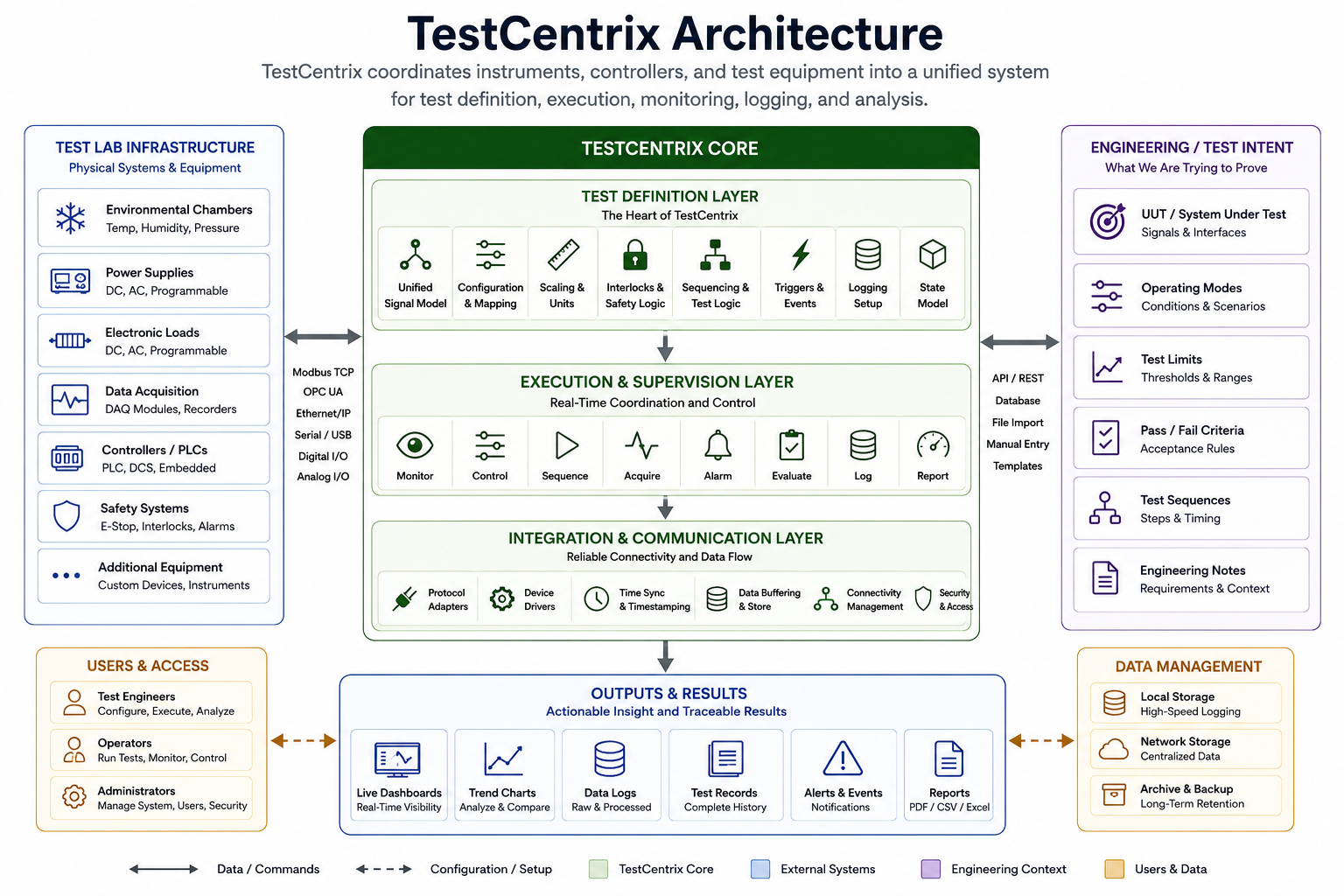
In real systems, the value is often not in any single device. It is in the coordination between devices, interfaces, software, operators, and data.
That is where reliable test systems, automation systems, and embedded platforms succeed or fail.
SigCore UC, TestCentrix, and consulting work are connected parts of the same engineering practice.
SigCore UC focuses on physical I/O, embedded services, and networked control. TestCentrix focuses on test coordination, system definition, visibility, logging, and supervisory execution.
Both reflect the same approach: hardware, software, signals, communications, and deployment treated as one system.
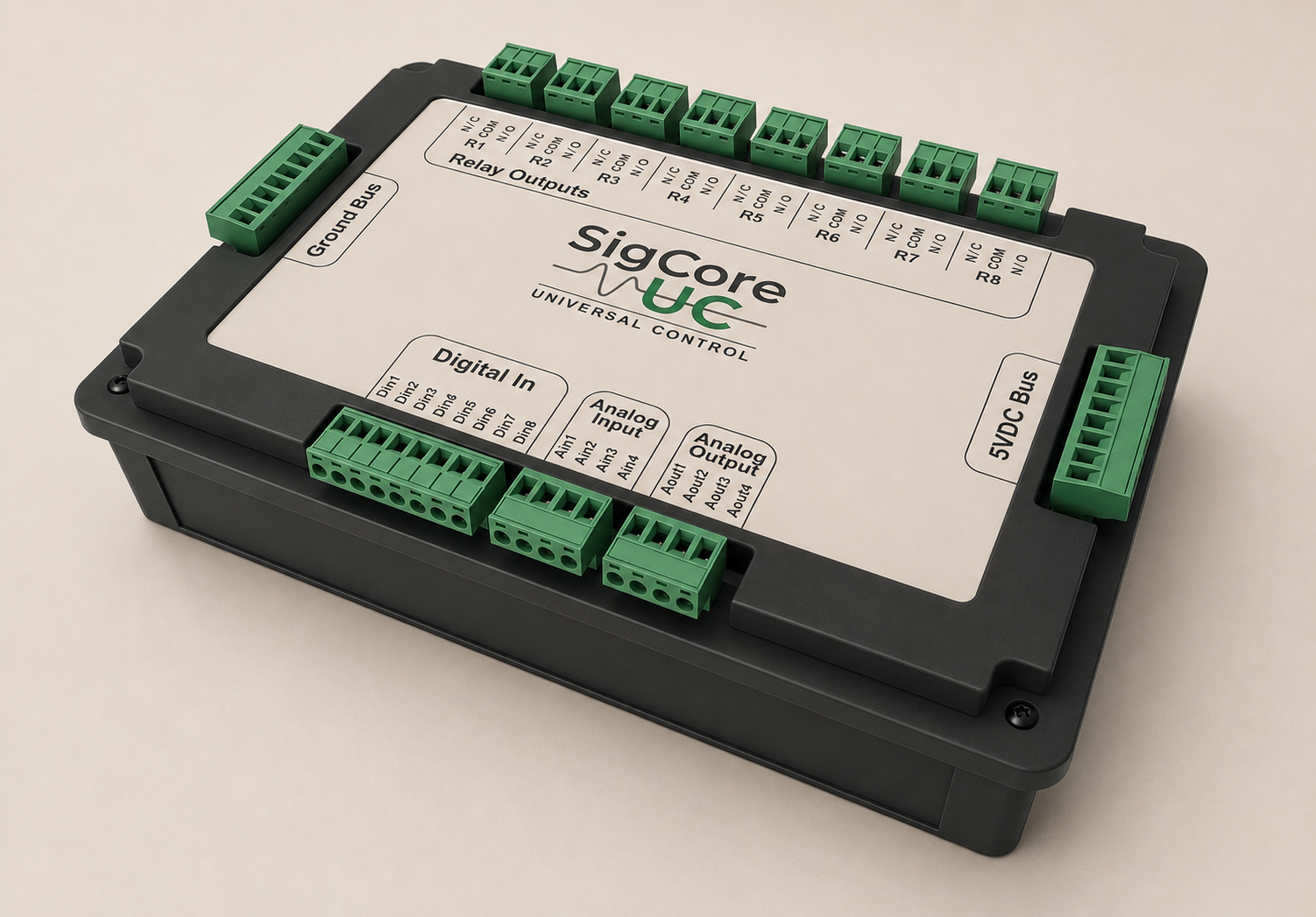
Embedded industrial I/O, Linux services, APIs, and physical system control.
Test-centric SCADA, system coordination, logging, and visibility.
Embedded systems, industrial automation, test integration, and control software development.
Email: eddie.schmitz@hotmail.com
Phone: VIII O 5 • VI 5 O • ² I O I
(obfuscated to reduce spam scraping)